Pet-friendly upholstery is tested by muddy paws, damp noses, loose fur, and the occasional claw—not by a showroom sample alone. The American Pet Products Association’s 2025 State of the Industry report estimates that 94 million U.S. households own at least one pet. That scale makes fabric choice a practical design decision, not a niche concern. Interior designer Nate Berkus has said, “Your home should tell the story of who you are, and be a collection of what you love.” For pet owners, that idea also means choosing a sofa that can handle real routines.
So, Which fabric is best for pet-friendly living room sofas? Tightly woven performance fabrics, such as solution-dyed polyester and some acrylic blends, often resist stains and clean more easily than loose weaves. Microfiber’s smooth surface can make fur easier to remove, while leather wipes clean but may show scratches. No fabric is invincible. A cat’s claws can snag a looped weave; a wet paw can leave marks on pale upholstery. The Association for Contract Textiles advises treating abrasion-test results as one comparison point, not a guarantee of lifespan. Ask about cleaning codes, removable covers, and the manufacturer’s care instructions before buying. Test a swatch at home, too. Rub it with a damp cloth, press pet hair into it, and see what actually comes away. That small check may reveal what a polished product label does not.
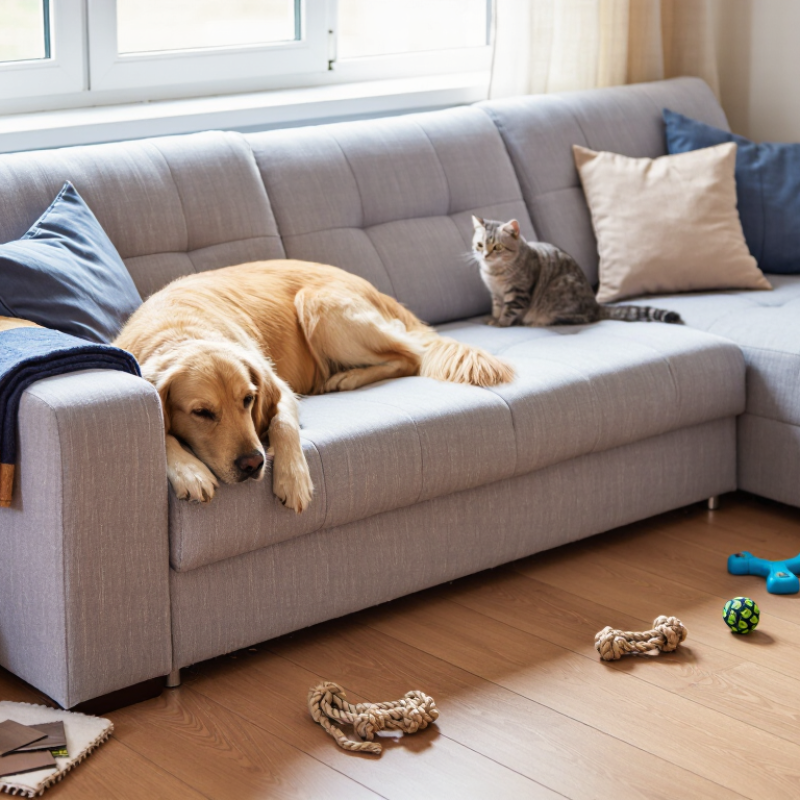
A pet-friendly sofa fabric balances fiber, weave, and easy cleaning. Polyester and nylon often resist wear and dry quickly after spot cleaning. Microfiber’s dense surface can make loose hair easier to remove with a vacuum. By contrast, loosely woven linen may snag on claws, while absorbent fibers can hold spills longer. No fabric is invincible. Check the care label before buying; cleaning rules vary, even among similar materials.
Weave matters as much as fiber. A tight, smooth weave leaves fewer loops for claws to catch and hair to lodge in. Textured bouclé may look cozy, but its loops can invite snagging. Darker or mixed-tone colors can disguise stray hairs between cleanups, though they will not hide every mark. For stains, blot promptly with a clean cloth instead of rubbing. Test any cleaner on a hidden area first. Even careful cleaning can alter some finishes.
Tips: Keep a washable throw over your pet’s favorite spot. Vacuum seams and cushion edges weekly, where fur gathers. I find this routine helps, but it is easy to miss a corner. Dog nails and cat claws still need regular attention.
| Fabric type | Common fiber content | Typical weave or surface | Hair and snag considerations | Everyday cleanability | Pet-friendly fit |
|---|---|---|---|---|---|
| Microfiber | Usually polyester; sometimes a polyester blend | Very fine fibers with a dense, smooth surface | Often easier to brush or vacuum than open, nubby weaves. Claws can still pull or abrade the surface. | Many spills can be blotted promptly; cleaning method depends on the fabric’s care code and finish. | A practical choice for homes where shedding and routine spot cleaning are concerns. |
| Tightly woven polyester | Polyester, sometimes blended with other fibers | Compact plain or basket weave with relatively small gaps | A tight construction can limit loose threads for claws to catch; hair may be more visible on some colors and textures. | Generally suitable for regular vacuuming and prompt blotting, subject to the maker’s instructions. | A balanced option when choosing a closely woven, easy-care upholstery. |
| Solution-dyed acrylic | Acrylic fibers colored during fiber production | Available in a range of woven upholstery textures | Performance varies by weave and finish; check the specific fabric for snag resistance and care guidance. | Some upholstery versions are designed for easier maintenance, but cleaning instructions are product-specific. | Worth considering when color retention and routine maintenance are priorities. |
| Performance velvet | Often polyester or a synthetic blend | Short, dense pile rather than a visibly open weave | Hair can sit on the surface and may be removable with a suitable brush or vacuum attachment. Pile can show pressure marks. | Blot spills without rubbing; use only the cleaning method approved for that upholstery. | Can work well if the specific velvet is designed for upholstery and the household accepts regular hair removal. |
| Canvas or duck cloth | Often cotton, polyester, or a blend | Plain, sturdy weave; texture and openness vary | A dense, smooth version is usually easier to maintain than a loose weave; rough claws may still catch threads. | Removable covers can simplify care when labeled washable; fixed upholstery may require spot cleaning. | A useful option when the cover is removable and its care label permits laundering. |
| Linen or linen blend | Linen, often blended with cotton or synthetic fibers | Natural, textured weave; construction varies | Loose or textured versions may catch claws more readily and can show pulls or wrinkles. | Can be more demanding to clean; follow the care label and test approved cleaners on an inconspicuous area. | Best for lower-traffic spaces or households prepared for careful upkeep. |
Selection note: Pet-friendliness depends on the exact weave, finish, color, and care instructions—not fiber content alone. No upholstery is claw-proof or stain-proof. Check the sofa’s care label and test any approved cleaning method in an inconspicuous spot.
Its dense, short fibers give claws fewer loops to catch. Crumbs are often easy to vacuum. Hair can cling in dry rooms.
Most hair wipes off leather with little effort. Sharp nails can still leave scratches or punctures. Not claw-proof.
Tight weaves, such as canvas-like upholstery, usually offer fewer loose loops. Check the surface closely before choosing.
Inspect it in daylight. Rub it gently with a clean cloth, then see how easily loose hair lifts away. A small swatch cannot show years of wear.
Choose a tightly woven fabric with low loops. It may offer fewer threads to catch, but no fabric is guaranteed to stay untouched.
A smooth, close-textured surface is often easier to brush or vacuum. A rubber upholstery brush can lift hair without rough scrubbing.
Yes. Pale fabric can show muddy paw prints, while dark fabric may reveal light-colored fur. No perfect color exists.
Ask for abrasion and snagging test details, then compare them with the care instructions. Removable covers can help with frequent washing, but drying and refitting take effort. Small habits count.
Choosing a pet-friendly sofa fabric means balancing durability, texture, and ease of care. Consider how the fibers and weave affect snagging, hair buildup, and cleaning. Microfiber, leather, and tightly woven fabrics can be practical options, though each responds differently to claws, shedding, and spills. For a useful durability reference, compare performance with ACT heavy-duty benchmarks, including 30,000 Wyzenbeek rubs, while remembering that abrasion ratings do not guarantee resistance to every type of pet damage.
Which fabric is best for pet-friendly living room sofas depends on your pets and daily routine. Review manufacturer test results and care labels to understand stain protection and cleaning requirements before choosing. A fabric that suits a household with frequent shedding may differ from one chosen for pets prone to muddy paws or occasional accidents. Match the material to how often the sofa is used and how much maintenance you can comfortably manage.

 Nichols furniture