Counter Stool vs Bar Stool What Are the Key Differences?

Time:2026-05-31 Author:Ethan
0%

When choosing the right seating for your kitchen or bar area, understanding the nuances of furniture styles becomes essential. "Counter stool vs bar stool: what is the difference?" is a question often posed by homeowners and interior designers alike. According to Sarah Johnson, a seasoned furniture design expert, “The height difference can completely change the dining experience.” Her insight emphasizes how these two styles serve distinct purposes.

Counter stools typically stand between 24 to 27 inches tall, making them perfect for standard kitchen counter heights. In contrast, bar stools are usually around 28 to 32 inches, fitting higher bar tables or countertops. This height discrepancy impacts comfort and usability. Choosing incorrectly might cause awkward seating placements.

Moreover, styles vary widely. Counter stools often feature backs for added support, while bar stools can have more contemporary designs, sometimes without backs. This variability allows customization based on personal taste and space constraints. Investing time in understanding these differences leads to a more harmonious home environment. In the end, the choice between counter stools and bar stools goes beyond aesthetics; it shapes how we gather and enjoy our spaces.
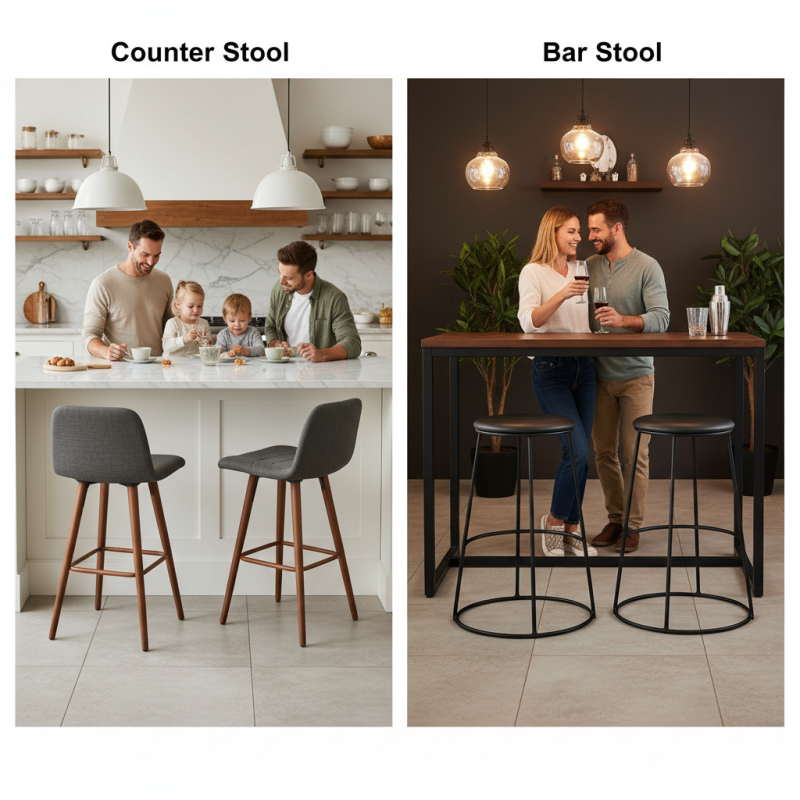
Counter Stool vs Bar Stool What Are the Key Differences?

Definition of Counter Stools and Bar Stools

Counter stools and bar stools serve similar purposes but differ significantly in height and overall design. Counter stools typically range from 23 to 28 inches in seat height, designed to fit standard kitchen counters. In contrast, bar stools often stand between 28 to 35 inches, aligning perfectly with taller bar tables. This distinction influences not just comfort but also the visual aesthetics of a space.

The materials used in these stools also vary. Bar stools often feature more durable fabrics or metals, accommodating high-traffic areas. A recent report indicated that 70% of consumers prefer bar stools in home bars for their sturdiness and modern look. Counter stools tend to prioritize comfort and coziness, featuring cushioned seats and backrests, making them ideal for kitchen areas. It's worth noting that choosing the wrong height can lead to awkward dining experiences, so it’s essential to measure correctly before purchasing.

While both stools fulfill functional roles, their specific attributes cater to different environments and needs. Interior designers stress the importance of aligning stool choice with the intended setting. This creates harmony in design and improves overall user experience. Understanding these nuances can significantly enhance your space, turning it into a carefully curated environment.

Key Height Differences Between Counter Stools and Bar Stools

When considering seating options for your kitchen or bar, height is a critical factor. Counter stools and bar stools differ primarily in their heights. Counter stools typically have a height of 24 to 26 inches from the seat to the floor. This makes them ideal for standard countertops, which are usually around 36 inches high. On the other hand, bar stools range from 28 to 32 inches. They are designed for taller surfaces like bar tables that stand about 40 to 42 inches high.

Choosing the right height matters more than many realize. A counter stool that is too tall can lead to discomfort. It may feel awkward, making it difficult to sit down or get up. Similarly, bar stools that are too short can leave you feeling cramped. This height mismatch can affect the overall enjoyment of your space.

It's essential to measure both the seating and the table height before making a decision. Ensure you have the appropriate amount of clearance between the seat and the tabletop. Typically, a distance of about 10 to 12 inches works well. If you're unsure, testing different heights in person can help. Pay attention to how they feel. Your choice should reflect comfort and functionality, catering to the needs of your home and guests.

Design and Style Variations of Counter and Bar Stools

Counter stools and bar stools offer different design and style variations that can significantly affect your space. Counter stools generally have a height of 24 to 26 inches, perfect for kitchen counters. They often feature a simpler design and may include upholstered seating for comfort. Many counter stools have shorter legs and can fit under countertops easily. The colors and materials can vary, allowing for a cozy or modern look.

Bar stools stand taller, with heights ranging from 28 to 32 inches. These are ideal for home bars or high-top tables. Their designs can be more elaborate, often seen in sleek metals or wood finishes. You might find bar stools with backrests for added support, enhancing both style and comfort. The mix of textures and finishes can elevate the aesthetic of any room, whether you're aiming for rustic charm or contemporary elegance.

Styling choices come down to personal taste, but consider the space's purpose. Will it be casual or formal? Do you want to make a bold statement or blend in? There’s no one-size-fits-all answer. Experimenting with different styles can lead to unexpected discoveries about your space and how you live in it.

Counter Stool vs Bar Stool: What Are the Key Differences?

Feature Counter Stool Bar Stool
Height Counter height (24-26 inches from the floor) Bar height (28-32 inches from the floor)
Ideal For Kitchen islands and countertops Bar tables and pub tables
Seat Design Often features back support Can be backless or with back support
Style Options Traditional, modern, farmhouse Industrial, contemporary, vintage
Material Choices Wood, metal, upholstered Metal, wood, plastic, leather
Comfort Level Generally more padded Varies widely; many options are minimalist

Functional Uses: When to Choose Counter Stools vs Bar Stools

When deciding between counter stools and bar stools, understanding their functional uses is crucial. Counter stools typically stand around 24-26 inches from the floor, making them ideal for kitchen islands or counters. They provide a comfortable height for casual meals and drinks. If you have a breakfast nook, counter stools might be your best bet.

Bar stools, on the other hand, are taller, usually 28-32 inches. They fit perfectly at bars or high-top tables. Their design often encourages a more social atmosphere, perfect for gatherings. If you entertain often, bar stools can enhance the vibe of your space. But, they might not be as comfortable for prolonged seating.

Tips: Ensure the height of your stools matches your table or counter. Consider the comfort of the seating. Look for styles that complement your decor. Mixing materials can create visual interest but be mindful of cohesion. Finding the right stool can take time. Don't rush this decision; it impacts your overall space feel.

Material Considerations for Counter and Bar Stools

When choosing between counter stools and bar stools, material plays a vital role. The right material can enhance comfort and durability, impacting functionality. According to industry reports, wood is often favored for its timeless appeal. However, metal stools are gaining traction due to their sturdy construction and modern aesthetic. Upholstered options, while comfortable, require more maintenance.

Design trends shift with consumer preferences. In recent surveys, 38% of respondents preferred metal for its contemporary look, while 30% opted for wood for warmth. Despite these preferences, each material has strengths and weaknesses. For instance, wood adds elegance but may scratch easily. Metal is resilient but can feel cold and uninviting. Upholstery offers coziness but can stain.

Sustainability has emerged as a crucial factor in material selection. Consumers are increasingly seeking eco-friendly options. Reports indicate that recycled materials are becoming popular choices. However, the availability can limit options. Choices can lead to buyer's remorse if not carefully considered. It's essential to weigh aesthetics, comfort, and environmental impact when selecting stools for a space.

FAQS

: What is the height difference between counter stools and bar stools?

: Counter stools range from 24 to 26 inches tall, while bar stools are typically 28 to 32 inches.

Why is choosing the right stool height important?

The wrong height can make sitting uncomfortable and hinder easy movement. It affects your enjoyment of the space.

How much clearance should be between the stool seat and the tabletop?

A clearance of 10 to 12 inches is ideal for comfort and functionality.

What styles and designs are available for counter stools?

Counter stools often have simpler designs, sometimes with upholstered seating, ideal for cozy kitchen environments.

How do bar stools differ in design from counter stools?

Bar stools tend to be more elaborate, available in metals or wood, and may include backrests for added support.

What materials are commonly used for counter and bar stools?

Common materials include wood, metal, and upholstery, each having unique benefits and drawbacks in terms of style and comfort.

Why is sustainability a factor in choosing stool materials?

Many consumers prefer eco-friendly options, though availability may limit choices and lead to potential regret.

Can personal taste influence the choice of stool design?

Yes, your design choice should reflect the room's purpose, whether casual or formal, bold or understated.

How do the comfort levels of different stool materials vary?

Upholstered stools offer softness but can stain, while wood and metal provide durability with varying warmth and feel.

What should you consider when selecting stools for your space?

Consider comfort, style, material, and how they fit your lifestyle and the space’s needs.

Conclusion

When considering the difference between counter stools and bar stools, it's important to understand their definitions and key features. Counter stools are typically shorter, designed for counter-height tables, while bar stools are taller and suited for bar-height surfaces. The height difference is a primary factor in choosing between the two, as counter stools usually range from 24 to 26 inches high, whereas bar stools typically stand between 28 to 32 inches.

In addition to height, there are various design and style options available for both counter and bar stools, catering to different aesthetics and functional uses. Counter stools are often preferred for casual dining or kitchen islands, while bar stools are favored for bars and high-top tables. Material considerations also play a role, as these stools can be found in wood, metal, and upholstery, impacting both durability and comfort. Understanding "Counter stool vs bar stool: what is the difference" can help you make an informed decision based on your space and needs.

Ethan

Ethan

Ethan is a seasoned marketing professional with a deep expertise in our company's innovative product line. With a passion for sharing knowledge and insights, he takes the lead in regularly updating our corporate blog, where he explores industry trends, product features, and effective marketing......