Outdoor wood coffee tables face a quiet but persistent threat: ultraviolet radiation, heat, rain, and repeated drying. The USDA Forest Products Laboratory’s Wood Handbook, FPL-GTR-282, explains that sunlight breaks down lignin near the wood surface. Moisture then washes away weakened fibers. The result appears gradually: silver-gray color, raised grain, hairline cracks, and rough edges around the tabletop.
Wood scientist Sam Williams of the USDA Forest Products Laboratory has emphasized, “Weathering begins when wood is exposed to sunlight and moisture.” That warning matters for every patio table, even under a covered roof. Shade slows damage. It does not stop ultraviolet exposure or humidity. The National Association of Home Builders also identifies exterior wood maintenance as a recurring ownership concern, especially where finishes face strong seasonal weather. Small details matter. A dark tabletop can become hot enough to dry unevenly. Water trapped beneath a planter can leave a pale ring or split the finish.
So, how to protect wood outdoor coffee tables from sun damage? The answer combines sensible placement, UV-resistant exterior oil or stain, sealed end grain, and regular inspection. There is no perfect finish. Clear coatings often preserve color poorly unless they contain effective UV absorbers. That is easy to overlook. A practical maintenance plan should include gentle cleaning, light sanding when needed, and recoating before the surface becomes visibly dry. Test products on an unseen area first. Even attractive timber can react unpredictably to coatings, weather, and daily use.
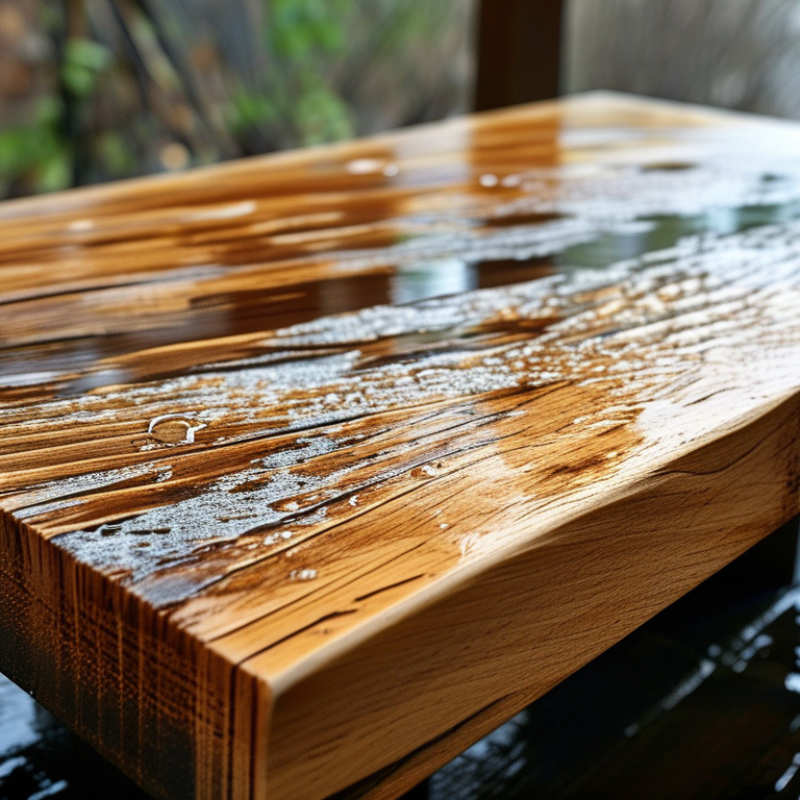
How to Protect Outdoor Wood Coffee Tables From Sun Damage?
Sun damage begins with ultraviolet radiation, not heat alone. The CIE classifies UVA as 315–400 nm and UVB as 280–315 nm. UVA penetrates deeper into wood surfaces. UVB carries higher energy and can accelerate surface breakdown. Both wavelengths attack lignin, the compound that helps hold wood fibers together. The USDA Forest Products Laboratory’s Wood Handbook, FPL-GTR-282, identifies ultraviolet exposure as a major cause of wood graying and surface weathering. Fading may appear uneven, especially on tabletops facing south or west.
Tips: Place the table under shade during peak sunlight. Use a breathable, UV-resistant cover. Reapply an exterior finish according to its label, not the calendar alone. Test the finish beneath the tabletop first. CIE exposure guidance and ASTM G154 laboratory methods show why UV testing needs controlled irradiance and moisture cycles. Household sunlight is less predictable.
I once underestimated reflected UV from pale paving. The tabletop faded faster than the shaded legs. That detail matters. Wipe standing water away, because wet wood often weathers unevenly. Inspect every few months for dull patches, raised grain, or small cracks. Sanding can restore appearance, but it cannot reverse deep fiber damage. A finish with UV absorbers may slow fading, yet no coating blocks sunlight forever. Recheck protection after harsh summer weather.
| Assessment Dimension | Relevant Range or Condition | Typical Effect on Outdoor Wood | How to Assess It | Protection Recommendation | Priority |
|---|---|---|---|---|---|
| CIE UVB exposure | 280–315 nm | UVB carries higher photon energy and can contribute strongly to surface photochemical damage, pigment breakdown, and coating degradation. Outdoor UVB levels vary with season, latitude, altitude, ozone, and time of day. | Use a site-specific UV index or calibrated UV radiometer when precise exposure data is required. For routine care, note periods of direct midday sun. | Use an exterior finish containing a documented UV absorber or UV stabilizer, and combine it with shade. Recoat when the finish becomes thin, chalky, cracked, or uneven. | High |
| CIE UVA exposure | 315–400 nm | UVA is abundant in daylight and penetrates more deeply than UVB. It promotes lignin degradation, color fading, graying, and long-term weakening of exposed wood fibers and transparent coatings. | Record the number of hours the tabletop receives unobstructed daylight. South- and west-facing locations commonly receive stronger afternoon exposure in the Northern Hemisphere. | Prefer a pigmented exterior stain or paint when preserving the original wood color is important. Clear finishes generally require more frequent maintenance than pigmented systems. | High |
| Direct-sun duration | Less than 2 hours per day | Lower cumulative UV dose, although repeated wetting, drying, and seasonal exposure can still cause fading and surface checking. | Observe the table throughout the day or use a sunlight-tracking application to estimate direct exposure. | Apply a suitable exterior finish, keep the surface clean, and inspect at least twice per year. | Low |
| Direct-sun duration | 2–6 hours per day | Moderate cumulative UV exposure can gradually fade stain, dry the surface, and accelerate coating wear, especially on horizontal surfaces. | Track direct sunlight during the strongest part of the day and check whether the tabletop is exposed after rain has dried. | Use a UV-resistant exterior coating, add partial shade during peak sunlight, and inspect annually for fading, roughness, or water absorption. | Medium |
| Direct-sun duration | More than 6 hours per day | High cumulative UV dose increases the likelihood of noticeable color change, lignin breakdown, surface graying, and premature finish failure. | Measure or estimate daily exposure during the highest-sun season. Pay special attention to south- and west-facing placements. | Provide a breathable canopy or movable shade, use a pigmented exterior stain or paint with UV protection, and schedule more frequent inspections and maintenance. | High |
| Table orientation | Horizontal tabletop | A horizontal surface receives direct sunlight and can retain rain or condensation, increasing combined UV, moisture, and thermal stress. | Compare the tabletop with shaded vertical or underside areas. Uneven fading is a practical indicator of exposure differences. | Use a finish designed for horizontal exterior surfaces. Keep the tabletop clean and dry when possible, and avoid standing water. | High |
| Finish type | Clear, unpigmented finish | Allows the natural grain to remain visible but generally provides less color shielding than a finish containing light-scattering pigments. Failure may appear as yellowing, peeling, cracking, or loss of water repellency. | Check for dull areas, exposed fibers, flaking, discoloration, and water that no longer beads on the surface. | Choose a clear exterior product specifically rated for UV exposure, follow the manufacturer’s film-thickness and recoating instructions, and sand only as directed. | High |
| Finish type | Pigmented exterior stain or paint | Pigments can absorb or scatter part of the incident UV radiation and generally provide better color protection than a completely clear finish. Dark colors may absorb more solar heat. | Inspect for fading, chalking, peeling, exposed wood, and changes in gloss or color uniformity. | Maintain the coating according to its exterior-use instructions. Clean gently before recoating and repair damaged areas promptly. | Medium |
| Shade and cover | Permanent shade, umbrella, canopy, or breathable furniture cover | Reducing direct radiation lowers cumulative UVA and UVB dose. Non-breathable covers can trap moisture and may create a different type of wood damage. | Confirm that shade blocks direct sunlight during peak exposure and that covers allow airflow and do not rub against the finish. | Use shade whenever practical. Select a breathable, light-colored cover and remove it periodically to allow the table and cover to dry fully. | High |
| Surface temperature and moisture cycling | Repeated heating, cooling, wetting, and drying | Thermal and moisture movement can open small checks, stress joints, and accelerate finish breakdown alongside UV exposure. | Look for end-grain cracks, raised grain, loose joints, cupping, and areas that remain damp after rain. | Seal exposed end grain as appropriate, keep drainage paths clear, maintain a uniform finish, and place the table on a level surface with airflow beneath it. | High |
| Inspection interval | Every 3–6 months in strong sun; at least annually in mild exposure | Early maintenance can prevent minor fading, chalking, or small finish defects from progressing to bare-wood exposure. | Compare protected and exposed areas, check water repellency, and document color or coating changes with photographs taken in consistent lighting. | Clean with a mild, compatible solution, allow the wood to dry, and recoat only after confirming compatibility and following the product instructions. | Medium |
Ultraviolet light causes most fading, not heat alone. UVA reaches deeper, while UVB damages the surface faster. Both weaken lignin.
South- and west-facing tabletops often fade sooner. Pale paving can reflect ultraviolet light upward. The shaded legs may stay darker.
Move the table under shade during peak sunlight. Use a breathable, UV-resistant cover. Avoid sealing in dampness.
Inspect it every six to twelve months. Check after rainy seasons and bright summer weather. Look for dull patches, raised grain, or small cracks.
Pour a teaspoon of water onto clean wood. Rounded droplets suggest useful repellency. Fast spreading or darkening means recoating may be needed.
Inspect joints, edges, end grain, and places beneath cups. These areas often fail before the wide tabletop. Small spots matter.
Recoat when water stops beading, after cleaning and complete drying. Follow the finish instructions instead of relying only on dates. Damp wood should not be coated.
Sanding can improve dull color and remove loose fibers. It cannot restore deeply damaged wood fibers. I once waited for cracks; that made sanding harder.
No finish blocks ultraviolet light permanently. Products with UV absorbers can slow fading. Harsh summers may shorten their useful life.
Rain and humidity make wood swell and shrink repeatedly. Standing water can create uneven weathering. Wipe wet areas away promptly.
How to protect wood outdoor coffee tables from sun damage begins with understanding the exposure they receive. Ultraviolet radiation, including UVA wavelengths from 315–400 nm and UVB wavelengths from 280–315 nm, can fade wood, weaken its surface, and accelerate weathering. Select a protective coating that has been tested through ASTM G154 UV-condensation cycles, as this provides a useful indication of how the finish may perform under repeated sunlight and moisture conditions.
Before application, prepare the table according to surface-care principles outlined by the USDA Forest Products Laboratory, removing dirt, old failing finish, and rough fibers. Apply a UV-resistant finish evenly and follow the manufacturer’s recommended coverage rate to ensure consistent protection without excessive buildup. Inspect the table every six to twelve months, paying close attention to fading, cracking, or reduced water beading. When water no longer forms visible beads, clean and recoat the surface to help maintain its appearance and extend the table’s outdoor service life.

 Nichols furniture