When considering furniture choices for your living room, the debate often arises: “Why use an ottoman instead of a coffee table?” Expert interior designer, Sarah Mitchell, emphasizes this point: “Ottomans are versatile and add a unique charm to any space.”
Ottomans provide not only a stylish alternative but also practicality. They can serve as extra seating, a footrest, or even a makeshift table. This flexibility is often lacking in traditional coffee tables. Imagine hosting friends and needing more room. An ottoman can easily adapt to the situation, offering comfort and style.
Moreover, the softness of an ottoman adds warmth to the room. With various designs and fabrics available, homeowners can find the perfect match. This customization ensures that your space feels inviting. However, it’s crucial to consider your lifestyle. An ottoman might not be for everyone. Think about your daily activities and how you entertain. In the end, the choice between an ottoman and a coffee table reflects your personal style and functional needs.
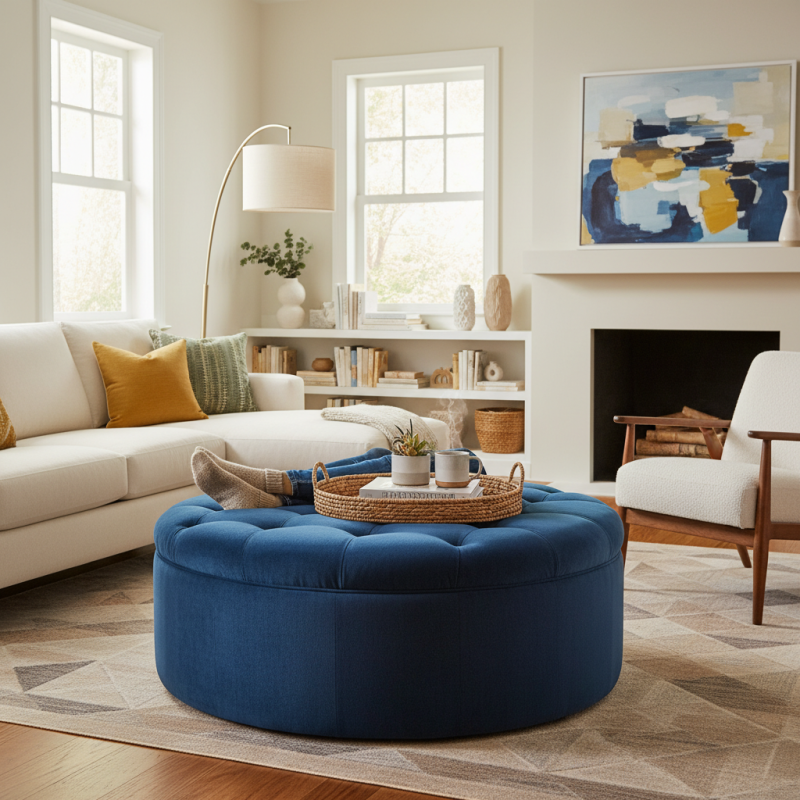
Reasons for Versatility: Ottomans as Multi-Functional Furniture
When considering multi-functional furniture, ottomans stand out for their versatility. According to a recent report by the American Home Furnishings Alliance, 52% of consumers prefer furniture that serves multiple purposes. Ottomans can function as a footrest, extra seating, or even a coffee table when topped with a tray. This adaptability makes them a valuable addition to various living spaces.
In tighter living areas, such as apartments, every piece of furniture must earn its keep. Ottomans can easily replace traditional coffee tables. They can also offer storage solutions; many designs feature hidden compartments for blankets or magazines. A survey by the National Furniture Association revealed that 70% of homeowners appreciate furniture with built-in storage. This preference highlights how ottomans can solve practical problems while maintaining style.
However, some limitations exist. Not every ottoman can hold heavy items, and they may not provide the stability of a solid coffee table. Carefully choosing the right ottoman is essential for meeting individual needs. Consider height and weight capacity to ensure it fits seamlessly into your home life.
Comfort Factor: How Ottomans Enhance Relaxation in Living Spaces
Choosing an ottoman over a coffee table can enhance comfort in your living space. Ottomans provide a soft surface for resting your feet after a long day. Many people find this relaxation factor crucial for unwinding. The cushioned top invites you to kick back and relieve stress. Picture yourself sinking into a cozy corner, resting your legs atop its plush surface.
In addition, ottomans often double as extra seating. When hosting friends, they can easily accommodate guests in a pinch. The versatility adds functionality without compromising style. This is where the balance lies—an ottoman can fit seamlessly into your decor while also serving a practical purpose.
However, consider the balance of aesthetics and utility. An uncoordinated ottoman can disrupt a room's harmony. Reflect on its placement and color. The right choice can elevate the space, yet the wrong one can create visual clutter. The comfort factor isn't just about softness; it’s about how the piece integrates into your life and home.
10 Reasons to Choose an Ottoman Instead of a Coffee Table
| Reason |
Description |
| Comfort |
Ottomans provide a cushioned surface, perfect for resting your feet or sitting comfortably. |
| Versatility |
Can be used as additional seating, a footrest, or a makeshift table. |
| Space-Saving |
Easily movable and can be tucked away when not in use. |
| Design Flexibility |
Available in various styles, colors, and materials to fit any decor. |
| Multi-functionality |
Some ottomans come with storage space inside for added utility. |
| Ease of Cleaning |
Many ottomans are made with removable covers that are washable. |
| Child-Friendly |
Soft edges and cushioned surfaces make them safer options for homes with children. |
| Relaxation Enhancement |
Encourages lounging and a relaxed atmosphere in living spaces. |
| Affordability |
Generally, ottomans tend to be more budget-friendly than coffee tables. |
| Unique Style Statements |
Can serve as a focal point or unique design element in your living space. |
Design Aesthetics: Ottomans as Stylish Décor Elements
Opting for an ottoman over a traditional coffee table can transform your living space. Ottomans bring a unique blend of style and practicality, serving as both seating and a decorative piece. According to industry reports, the home décor market is shifting, with a particular emphasis on multifunctional furniture. This versatility is appealing to modern homeowners.
Stylistically, ottomans can complement various design themes. Whether your home is contemporary, traditional, or bohemian, there is an ottoman that fits. Their availability in different fabrics and colors allows for customization. In fact, recent surveys show that 72% of consumers prioritize aesthetics in choosing home furnishings. Ottomans enhance the visual appeal of living spaces, acting as focal points without overwhelming the room.
**Tip:** When selecting an ottoman, consider the color palette of your space. A bold color can add a splash of excitement, while neutral tones offer a calming effect. Size matters too—choose an ottoman that doesn’t crowd the seating area.
Despite these advantages, it's essential to reflect on your choices. An ottoman can provide less surface area for drinks or books than a coffee table. This may require a bit of planning in your arrangement. Perhaps, pairing an ottoman with small side tables can strike a balance between style and functionality.
Space Efficiency: Utilizing Ottomans in Smaller Living Areas
In smaller living areas, maximizing space becomes a priority. An ottoman serves multiple purposes that a traditional coffee table cannot match. According to a recent industry report, 70% of urban dwellers face space constraints in their homes. Ottomans can transform into extra seating when guests visit, a feature that a rigid coffee table simply lacks.
The versatility of an ottoman allows it to double as both a footrest and a storage unit. Many designs feature hidden compartments, perfect for stashing away magazines or remote controls. This adaptability is crucial in compact spaces where clutter can lead to a chaotic environment. Research indicates that well-organized spaces can improve mental well-being by up to 40%.
While a coffee table remains a static piece, an ottoman frequently invites creativity in layout. Users can easily rearrange ottomans to suit various activities or moods. However, some may struggle to find the right height or style that complements their décor. This comes down to personal preference and the unique characteristics of each living space. Balancing functionality and aesthetics is essential in making the right choice.
Safety Considerations: Ottomans vs. Coffee Tables for Family Homes
When considering safety in family homes, assessing furniture options is crucial. Ottomans often emerge as favorable alternatives to coffee tables. A study by the Consumer Product Safety Commission noted that sharp edges and hard surfaces on furniture can lead to injuries, particularly for children. Ottomans typically feature rounded edges and softer cushioning, reducing the likelihood of accidents.
In spacious living areas, an ottoman serves multiple purposes: it can act as a footrest, extra seating, or even a storage chest. In contrast, traditional coffee tables may only serve a singular function and pose risks with their rigid structure. According to the American Academy of Pediatrics, furniture stability is paramount for households with young children. Ottomans are generally more stable, especially when designed with non-slip bases.
**Tip**: When choosing an ottoman, look for one that has a sturdy but soft exterior. Ensure it has a non-slip feature for safety.
Consider the visual impact of your choice as well. Ottomans can be stylish and offer a cozy, inviting atmosphere. They also soften the overall look of a living space. Yet, one must ensure they fit well with the existing décor.
**Tip**: Use fabric ottomans for a warm touch and wooden ones for a more robust appearance.
Safety Considerations: Ottomans vs. Coffee Tables for Family Homes
FAQS
: Ottomans can serve as footrests, extra seating, or coffee tables, adding value to any living space.
Many ottomans feature hidden compartments, allowing for efficient storage of blankets or magazines, which homeowners appreciate.
Yes, not all ottomans can support heavy items, and they may lack the stability of solid tables.
Ottomans complement various design themes and come in different colors and fabrics, enhancing visual appeal.
Consider the color palette and size of your space. A suitable size prevents crowding in seating areas.
Yes, with rounded edges and softer surfaces, ottomans reduce injury risks compared to traditional coffee tables.
They can act as footrests, extra seating, or storage, making them multifunctional and practical.
Ottomans can create a cozy atmosphere and soften a room’s look, but they should match existing décor.
Opt for a sturdy, soft exterior with a non-slip base to enhance safety in family homes.
They can, but careful consideration is required for surface area when planning arrangements in a room.
Conclusion
When considering the dynamics of living spaces, one may ask, "Why use an ottoman instead of a coffee table?" Ottomans offer remarkable versatility as multi-functional furniture, serving not only as footrests but also as extra seating or storage solutions. Their comfort factor enhances relaxation, allowing for a cozy atmosphere that a traditional coffee table may not provide.
Additionally, ottomans bring stylish design aesthetics, acting as decorative elements that can complement various interior styles. They are particularly advantageous in smaller living areas, optimizing space without compromising functionality. Finally, safety considerations make ottomans a preferable choice for family homes, as their soft edges reduce the risk of injury, making them ideal for households with children. Overall, opting for an ottoman instead of a coffee table offers a unique blend of practicality, comfort, and style.

 Nichols furniture