How to Style a Minimalist Living Room with White Furniture?

Time:2026-11-07 Author:Ethan
0%

A minimalist living room should feel calm, not bare. White furniture can help reflect daylight and make a compact room feel more open, but it is not a shortcut to good design. The key is balancing clean shapes with texture, warmth, and practical choices. How to style a minimalist living room with white furniture begins with noticing how the room is used: where people sit, how sunlight moves, and what needs to stay within reach.

Start with one anchor piece, such as a white sofa with removable, washable covers. Add contrast through a pale oak coffee table, a wool rug, or linen curtains; these materials soften the crisp look without adding visual clutter. Keep the palette restrained, but not lifeless. A charcoal cushion or one leafy plant can give the eye somewhere to rest. Small details matter. Leave clear walking paths, and check that furniture fits before buying; a bulky white sectional can overwhelm a narrow room.

Lighting deserves attention, too. Combine daylight with warm bulbs, since cool lighting may make white surfaces feel stark. Choose finishes that suit your routine: glossy tables show fingerprints, while textured upholstery can be harder to clean. There is no perfect formula. Even a carefully planned room may feel too plain at first, so live with the arrangement and adjust slowly. This guide explores layout, color, materials, lighting, and upkeep to help create a space that feels simple, comfortable, and genuinely usable.
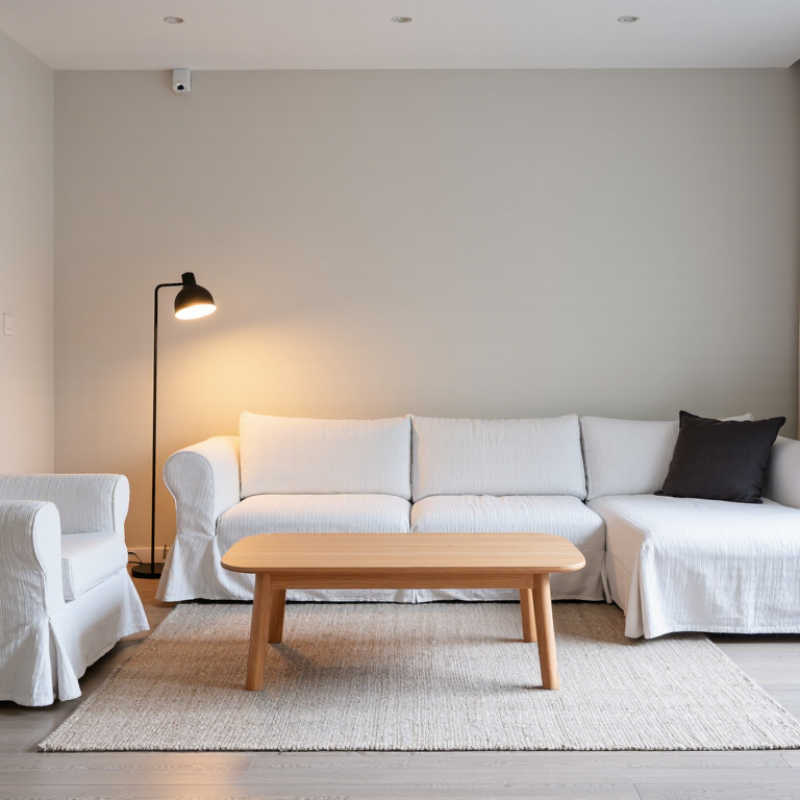
How to Style a Minimalist Living Room with White Furniture?

Assess the Room and Set Minimalist Design Priorities

Before bringing white furniture into a living room, assess how the space works throughout the day. Measure the walls, doorways, and walking routes, then note where people naturally sit or pass. Take notes. Check daylight at different hours; a white sofa can look warm near a sunny window and cool beside a shaded wall. Existing details matter too. Record the floor color, window trim, and any fixed shelves, since these surfaces will sit beside the furniture every day.

Set priorities around the room’s real needs, not just its appearance. If the room feels crowded, protect clear paths and choose fewer, better-scaled pieces. If storage is limited, consider a white cabinet with closed doors rather than adding decorative objects to every surface. For family rooms or homes with pets, washable covers and textured fabrics may be more practical than delicate upholstery. White shows marks. It can also make a small room feel brighter, though too many pale surfaces may look flat. A natural wood table, a woven rug, or one softly colored cushion can add contrast without creating visual clutter. I would avoid trying to solve every problem at once; the first layout may need adjusting after a few ordinary evenings.

Select White Furniture That Fits the Room’s Scale

Before choosing a white sofa, measure the room, doorways, and main walking routes. The National Association of Home Builders’ analysis of 2023 Census data puts the median new single-family home at 2,286 square feet. That figure covers the whole house, not the living room, so it cannot tell you what fits your space. Room dimensions matter more than national averages. Measure twice.

In a compact 11-by-13-foot room, a deep, wide sofa may crowd the path even if its white upholstery looks visually light. Note the full footprint, including arms and cushions, then mark it on the floor with painter’s tape. Leave comfortable passage around the seating; roughly 30 inches is a useful starting point, not a rule for every layout. A slim-legged chair can preserve sightlines, while a bulky white sectional may make the room feel smaller than expected. I still misjudge this sometimes.

Check scale vertically, too. A low sofa paired with a tall cabinet can look unbalanced, even when both pieces fit. Compare furniture heights with the window sill and nearby tables before buying. Small differences show. A white side table that is too large can interrupt an otherwise open arrangement, so test its footprint beside the sofa first.

Create a Restrained Palette with Varied Textures

A white living room can feel calm without looking bare. But an all-white scheme often loses depth, especially under cool daylight. Keep the palette restrained, then vary the surfaces. Warm white walls, ivory upholstery, and a pale oak table create subtle differences without introducing strong color. Check paint samples beside the furniture at different times of day; a shade that looks creamy at noon may turn gray by evening.

Texture does the quiet work. Pair a smooth cotton sofa with a chunky wool throw, a woven jute rug, and linen curtains that soften window light. A matte ceramic bowl can sit on a glossy side table, while a ribbed cushion adds detail at eye level. Keep it quiet. Too many rough surfaces can make a small room feel crowded, so leave some open space around furniture. I sometimes find that one cushion too many makes the sofa feel less restful.

Lighting changes how these materials read. In daylight, pale wood may look honey-colored; at night, the same surface can seem flat. Use a warm lamp near a textured wall, and let shadows add gentle contrast. A small, dark accent—such as a charcoal frame—can anchor the pale palette without taking over. If the room feels sterile, change one texture before adding another color. The fix may be simpler than expected.

Arrange Furniture to Support Comfort and Clear Movement

Place the sofa where it leaves a natural route from the doorway to the windows. Aim for about 30 inches of clear walking space on main paths, adjusting for the room and household. White furniture can make a small room feel airy, but crowded pathways still feel cramped. Leave breathing room.

Set a coffee table roughly 14 to 18 inches from the sofa, close enough to reach without leaning. Keep its corners away from the main walkway, especially in homes with children or pets. A pale rug can anchor the seating area, while its front edge should sit beneath the sofa’s front legs. Check the layout by walking through it, not just by viewing it from the doorway.

Arrange chairs to invite conversation without blocking light or movement. Angle one toward the sofa, then test whether people can sit down comfortably and pass behind it. White upholstery reflects daylight, though it can also show marks more readily; choose washable covers if daily use makes that practical. I’ve found that a layout that looks balanced in a photo may feel awkward after a few days. Move pieces, live with the arrangement, and adjust what interrupts your usual path.

How to Style a Minimalist Living Room with White Furniture

Arrange Furniture for Comfort and Clear Movement

Use these practical planning targets to keep a minimalist living room comfortable and easy to navigate: allow about 36 inches for a main walkway, 30 inches for a secondary path, and 18 inches between a sofa and coffee table. Adjust clearances to suit your room and household.

Add Purposeful Lighting and Minimal Decorative Accents

White furniture reflects light, so a living room can feel brighter but also flatter. Use lighting in layers: a ceiling fixture for general light, a floor lamp beside a reading chair, and a small table lamp near the sofa. Choose warm-white bulbs, around 2700–3000 kelvin, to soften pale upholstery without making it look yellow. A shaded lamp can reduce glare on glossy surfaces. Keep it gentle. Before buying anything, notice where shadows fall at dusk; a lamp that looks balanced in a shop may feel harsh beside a white wall.

Let each decorative object earn its place. A shallow ceramic bowl, a framed print with a muted charcoal line, or a branch in a clear glass vase can add texture without crowding the room. Repeat one or two materials, such as pale wood and brushed metal, so the accents feel connected. Leave some surfaces empty. That can feel stark. I once found a carefully arranged white room oddly cold until a small, imperfect woven cushion added warmth. Still, too many cushions or ornaments can weaken the calm effect. Edit slowly, and live with each change for a few evenings before deciding whether it belongs.

FAQS

What should I measure before adding white furniture?

Measure walls, doorways, and walking routes. Note where people sit and pass. Take notes.

How does daylight affect white furniture?

A white sofa may look warm beside a sunny window and cool near a shaded wall. Check the room at different hours.

How can I keep a small living room from feeling crowded?

Protect clear walking paths and choose fewer, well-scaled pieces. A white cabinet with closed doors can add storage without filling every surface.

Which fabrics work better for family rooms or homes with pets?

Washable covers and textured fabrics are often more practical than delicate upholstery. White shows marks, though. That part is easy to underestimate.

How can I stop a white room from looking flat?

Add a natural wood table, woven rug, or softly colored cushion. One or two contrasting details may be enough.

What lighting suits white furniture?

Layer a ceiling fixture, floor lamp, and small table lamp. Warm-white bulbs around 2700–3000 kelvin can soften pale upholstery. Keep it gentle.

Which decorations can add texture without creating clutter?

Try a shallow ceramic bowl, muted charcoal print, or branch in a clear glass vase. Repeat pale wood or brushed metal for a calmer look.

How do I know when the room has enough accents?

Leave some surfaces empty and live with each change for a few evenings. I might add too much at first; a room can feel oddly cold, too.

Conclusion

How to style a minimalist living room with white furniture begins with understanding the room’s size, natural light, and everyday needs. Set a few clear priorities, such as keeping walkways open and making the space feel calm, then choose white furniture that suits the room’s scale. Pieces that are too large can make a compact room feel crowded, while furniture that is too small may leave a spacious room feeling unfinished.

Keep the palette restrained, using subtle color variations and contrasting textures to add warmth and depth. Arrange seating and tables for comfort while preserving clear paths through the room. Finish with purposeful lighting that supports different activities, and choose only a few decorative accents that contribute to the overall feel. A thoughtful balance of function, texture, and open space helps create a simple living room that feels welcoming rather than stark.

Ethan

Ethan

Ethan is a seasoned marketing professional with a deep expertise in our company's innovative product line. With a passion for sharing knowledge and insights, he takes the lead in regularly updating our corporate blog, where he explores industry trends, product features, and effective marketing......